Leadup and implementation, January 2007
As usual, each picture is a link to a full-size version.
To start the next phase of hybrid-tech training, a second round of
demo pieces was needed.  A salvage dealer in Indiana who has been
specializing in Prius parts had a bunch of good stuff for us -- mostly
nonworking due to having been in flood cars or crashes, but great for
taking apart to illustrate principles and construction.  The first part of
this is some of the demo-building, and then some of the training.

[If this looks like something you'd want to get in on next time around, see
the ATTS website for details on these classes.  It's mostly geared [!] for
working repair techs, but shadetree guys and hobbyists might be interested
too.  Got a favorite independent mechanic who doesn't do hybrids yet but
would like to?  Point them here.]
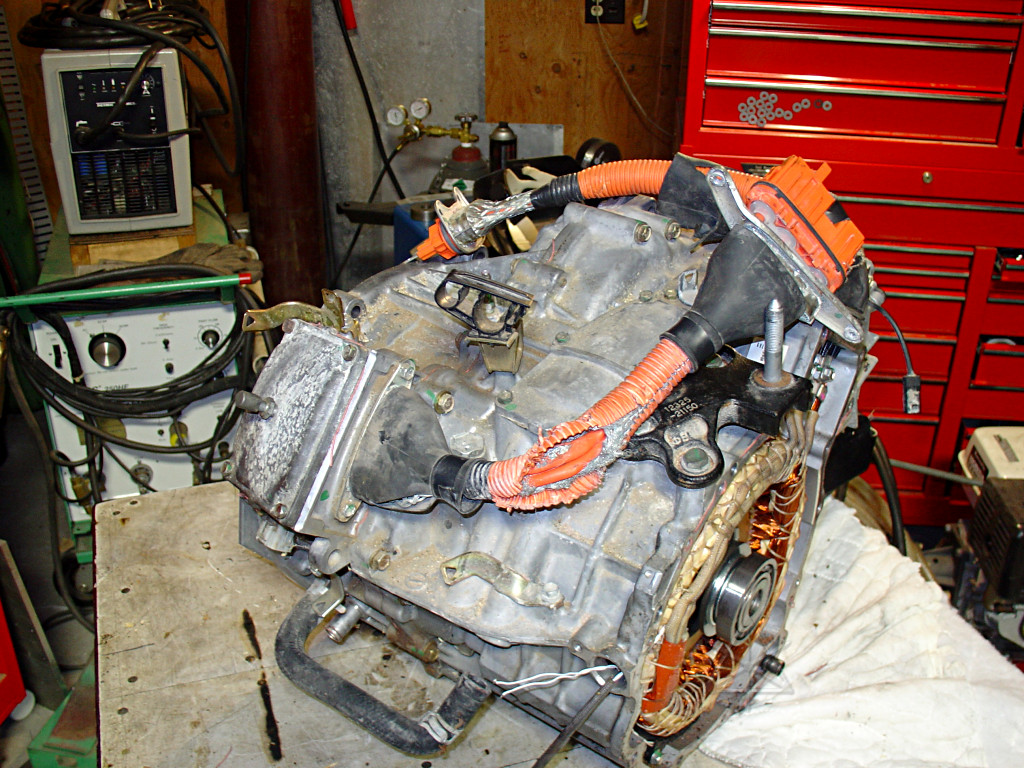
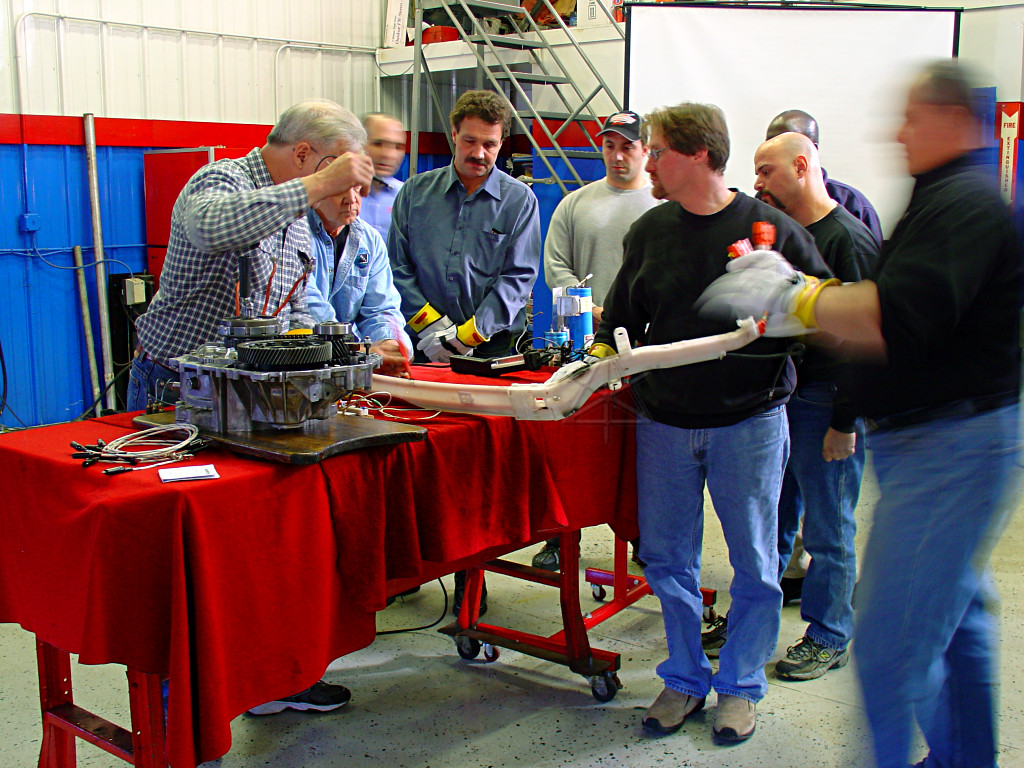
So here's this whole NHW20 transaxle.  Filthy, somewhat damaged, quite heavy
due to all the motor iron inside, but a great starting point.
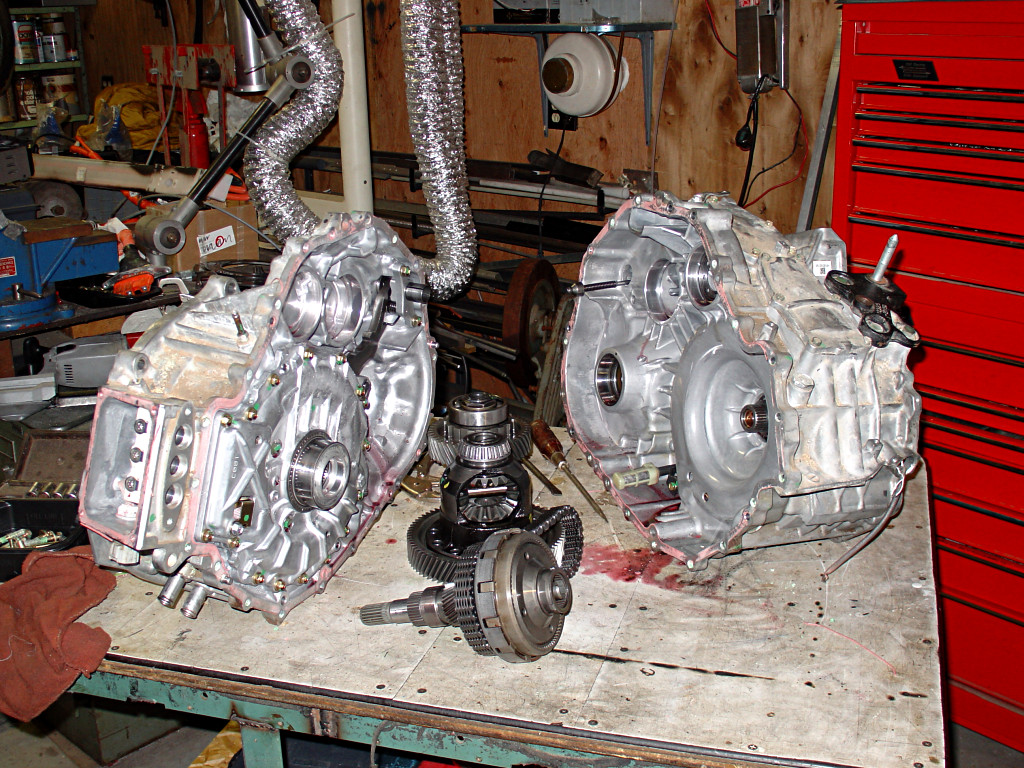
Which we then split the halves of, exposing all the mechanical parts...
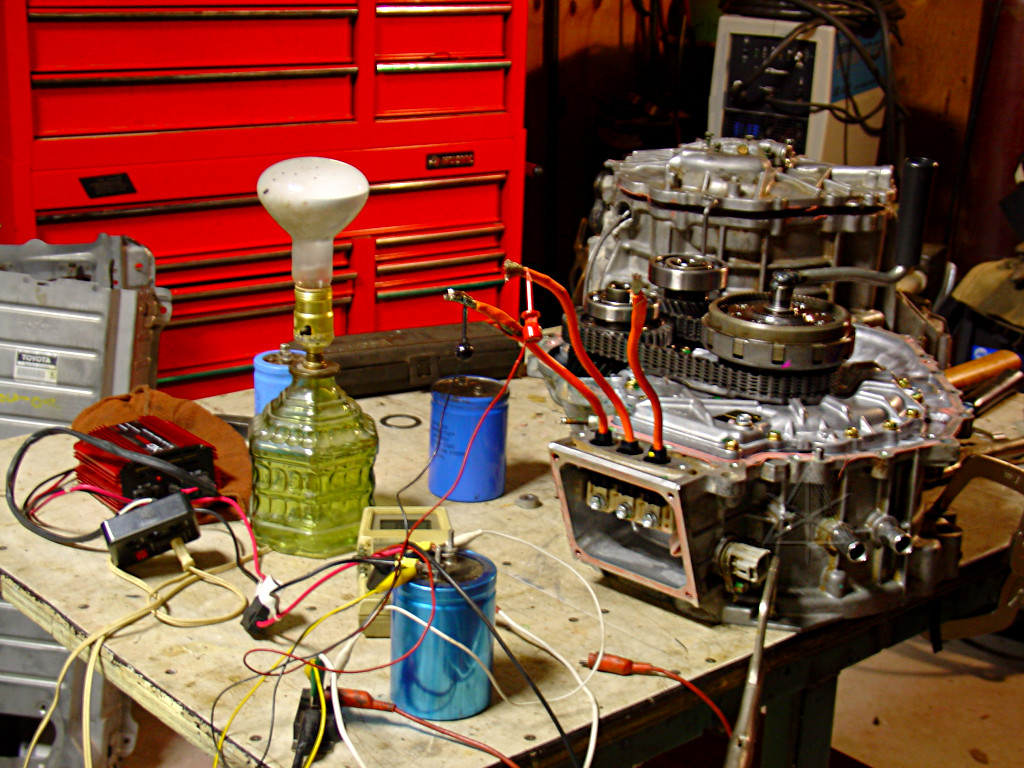
... and we decided that rather than crank MG1 directly, it made a lot more
sense to drop most of the drivetrain back in and actually have the person
cranking "be the engine".  The crank got welded to the ICE input shaft and
thus the planet carrier instead, giving a 3:1 speed-up to MG1 and retaining
the whole final drive and parking pawl assembly.  Makes it much clearer how
the car can charge the battery from MG1 while sitting still, and how loading
MG1 down transfers torque to the wheels.  Watch your fingers!  It was also
easier to hook all kinds of other experiments to the output.
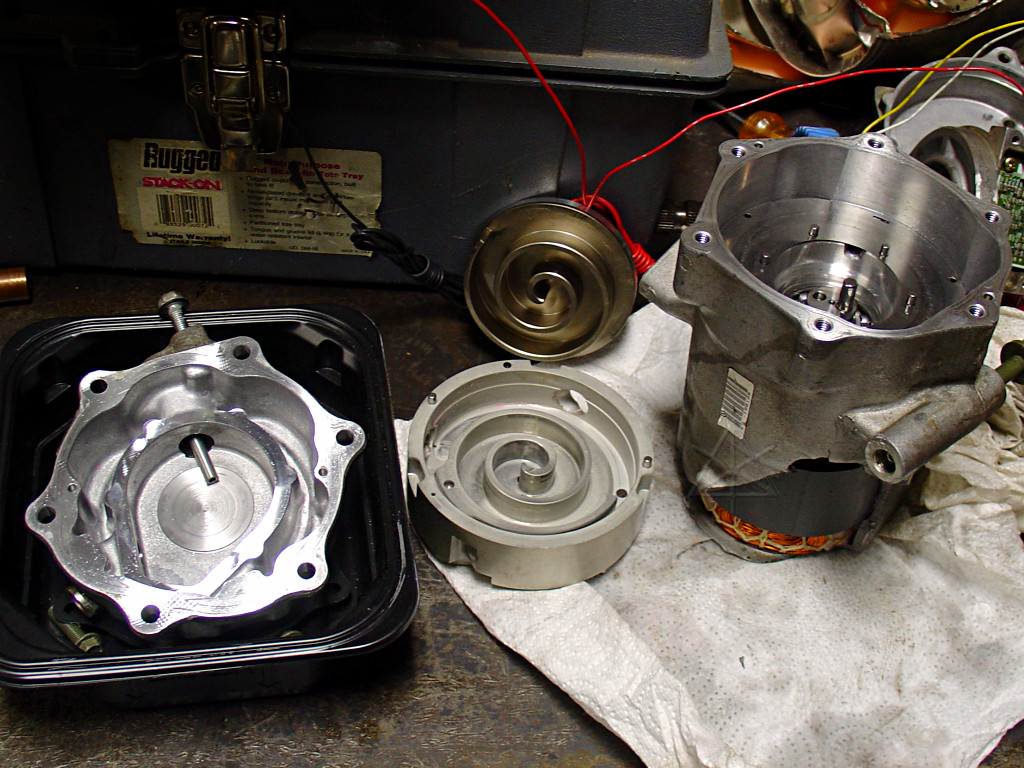
The scroll compressor for the air-conditioning is a beautiful piece
of machining.  The scroll doesn't spin, it translates in a circle and
acts like a really long rolled-up piston against the matching stationary
part.  The only damaged part of this was the back of the case; we could
actually run its motor straight from the 3-phase output of the "cranker"
and feel the pump compressing a little.
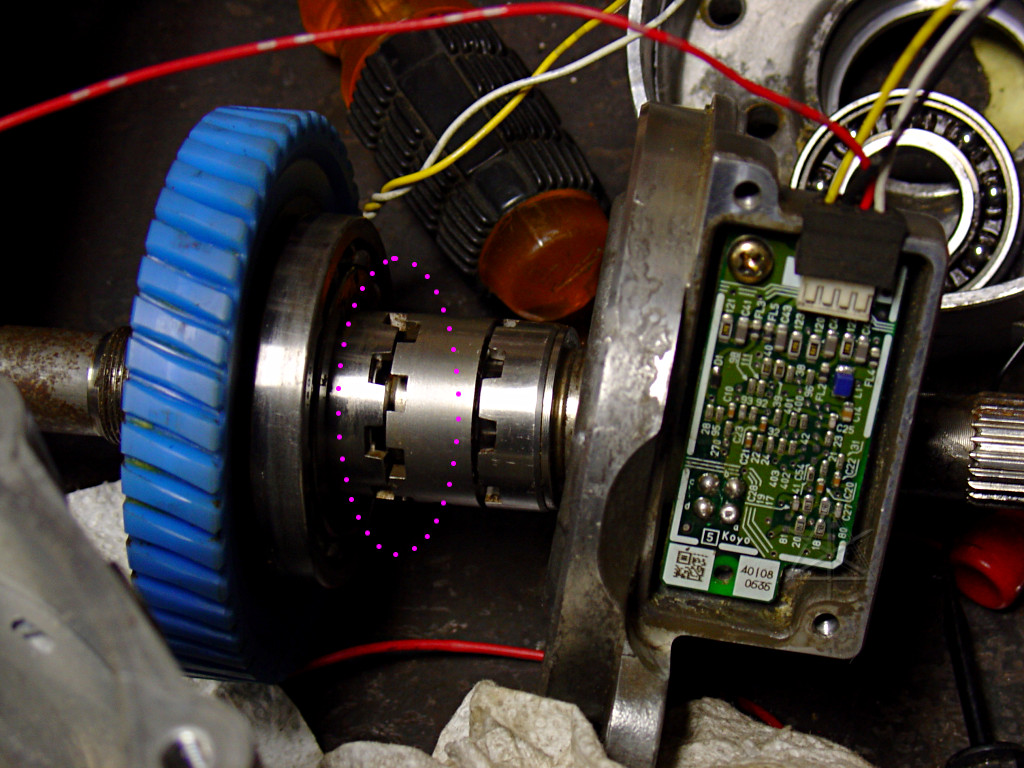
The electric power-steering torque sensor uses paired RF sense coils, and
changes the magnetic permeability as the wheel is turned and one piece of
the shaft either brings the teeth closer together or farther apart.  A
voltage delta results, telling the EPS ECU how much effort is being
exerted on the wheel, and the servomotor tries to bring the other half
of the shaft back close to zero.  Result?  Torque assistance.  The other
half-set of teeth is a thermal compensation reference.  The slope of the
nylon worm gear is steep enough that the shaft can be turned against
the worm to still steer when power is off.
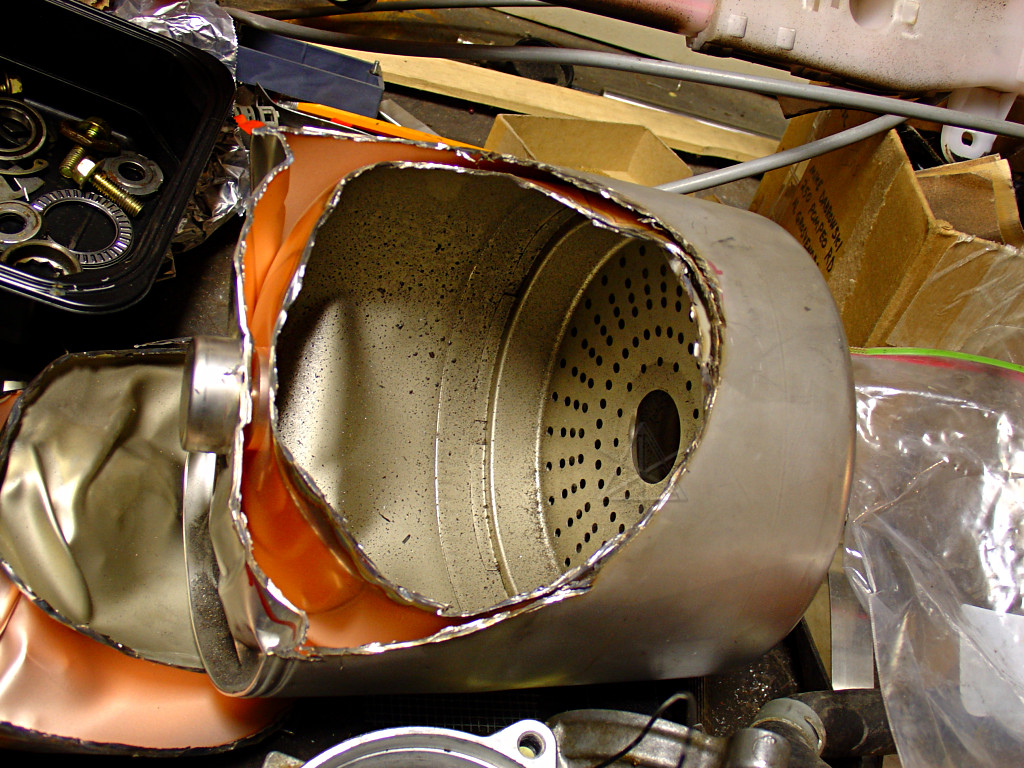
The coolant-storage thermos is just that -- a vacuum dewar flask.
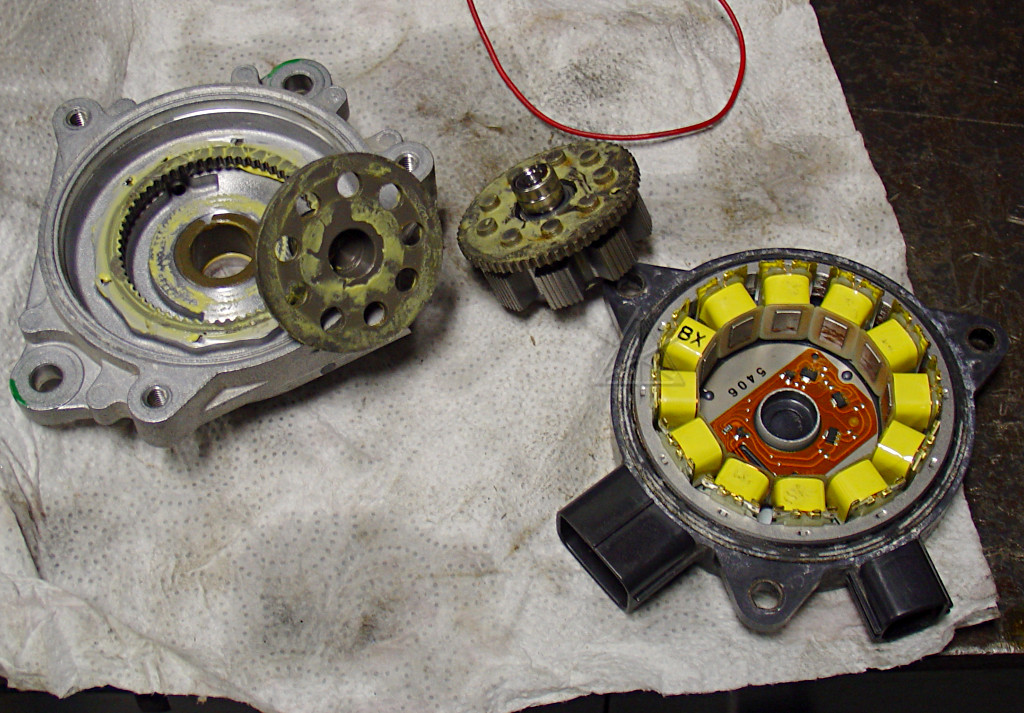
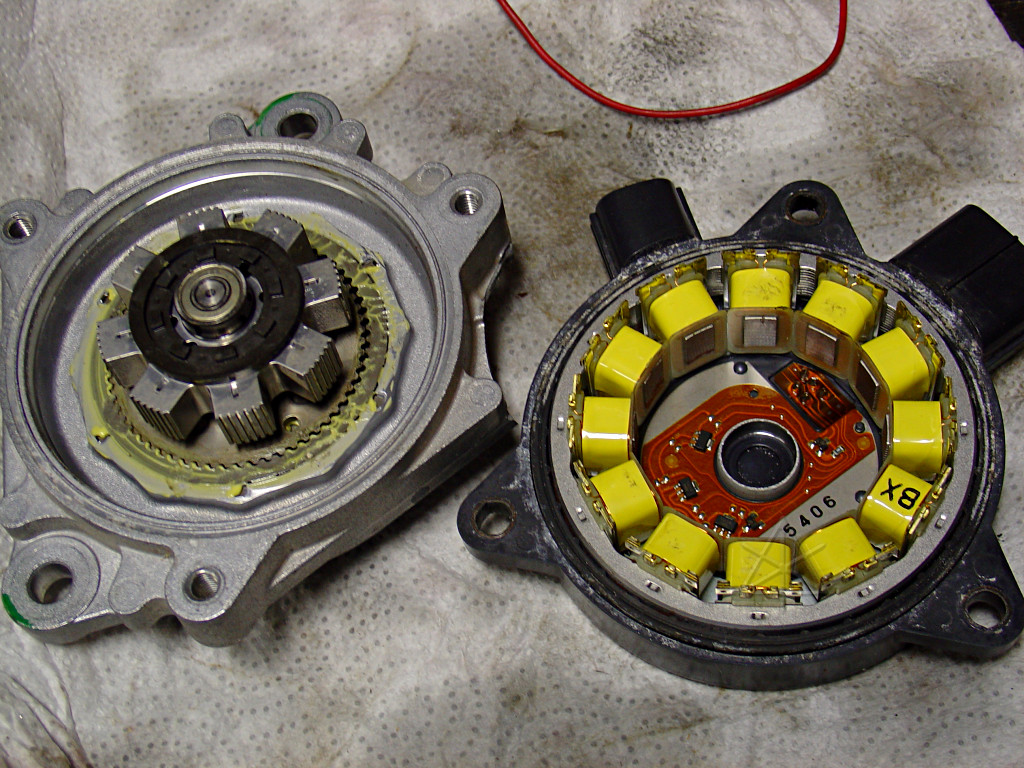
The parking-pawl actuator is fascinating -- a harmonic drive.  It's driven
by 3-phase output from the shift-control ECU, and each complete turn of
the rotor results in the gear-plate underneath advancing by ONE tooth.
That's coupled to the output for something like a 60:1 reduction, so this
little motor can reliably fire the parking pawl and yank it out despite
serious preload such as when the car's parked on a steep hill.  Note the
gap slowly increasing between the gears as you go around..

The Panasonic battery modules used in the '04+ Prius have two cell
interconnects rather than one, doubling the current capacity to 100 amps.
The weak link is probably the single studs at the ends now.  It was fun
milling down this one cell wall bit by bit to get to just the right level
and show the cross-section of the secondary connection.
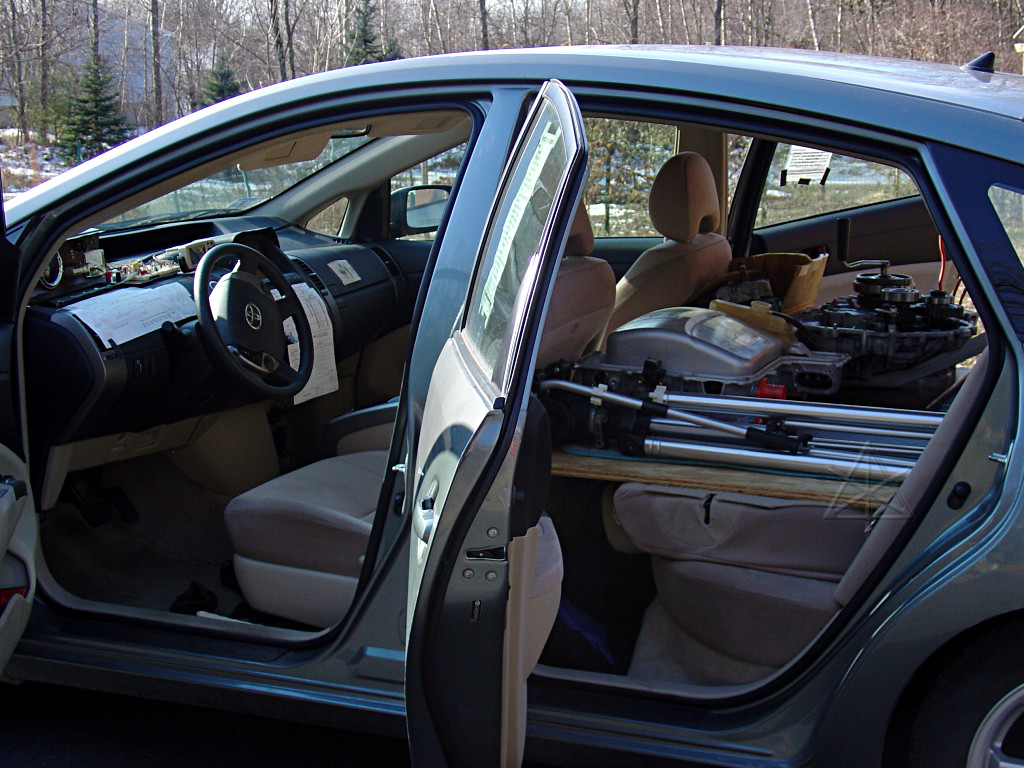
My car loaded and papered-up and ready to haul off to Mahopac NY.  Much
lighter load this time, actually -- more meat, less unusable fluff.
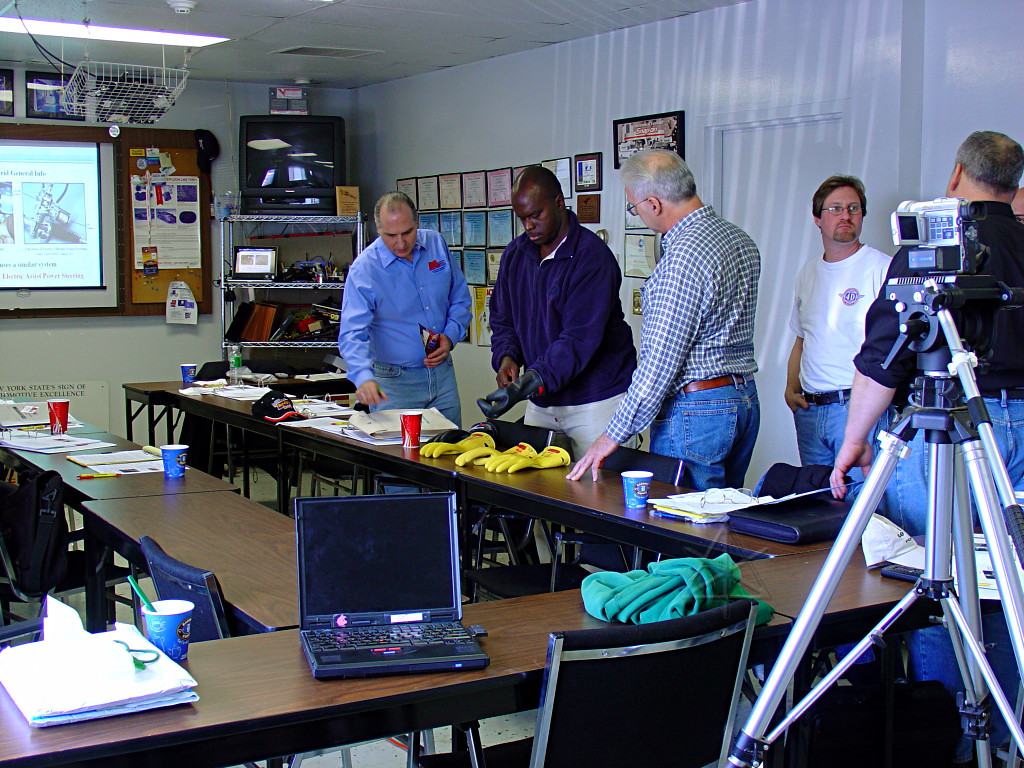
First things first: SAFETY. Correctly-fitting HV gloves are a first step.
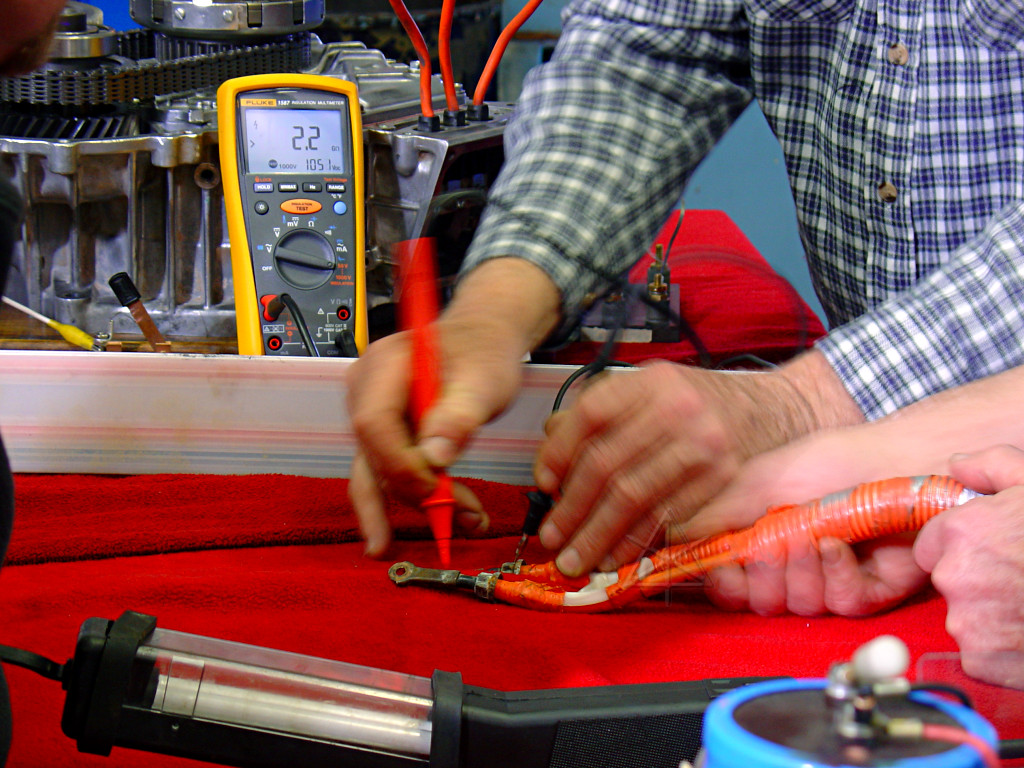
Testing a spare under-car HV harness wires for ground-fault leaks.  Mike
"wrestles the snake" and makes sure to scrape through the corrosion and
bite the probe down to bare metal, but this one returned a consistent 2.2
gigohms in a 1000V test meaning it could possibly still be safely used.
It would take quite a bit of cleanup to make the interconnects usable
again, though, and there's always a risk that internal corrosion may
limit its safe current-carrying ability.
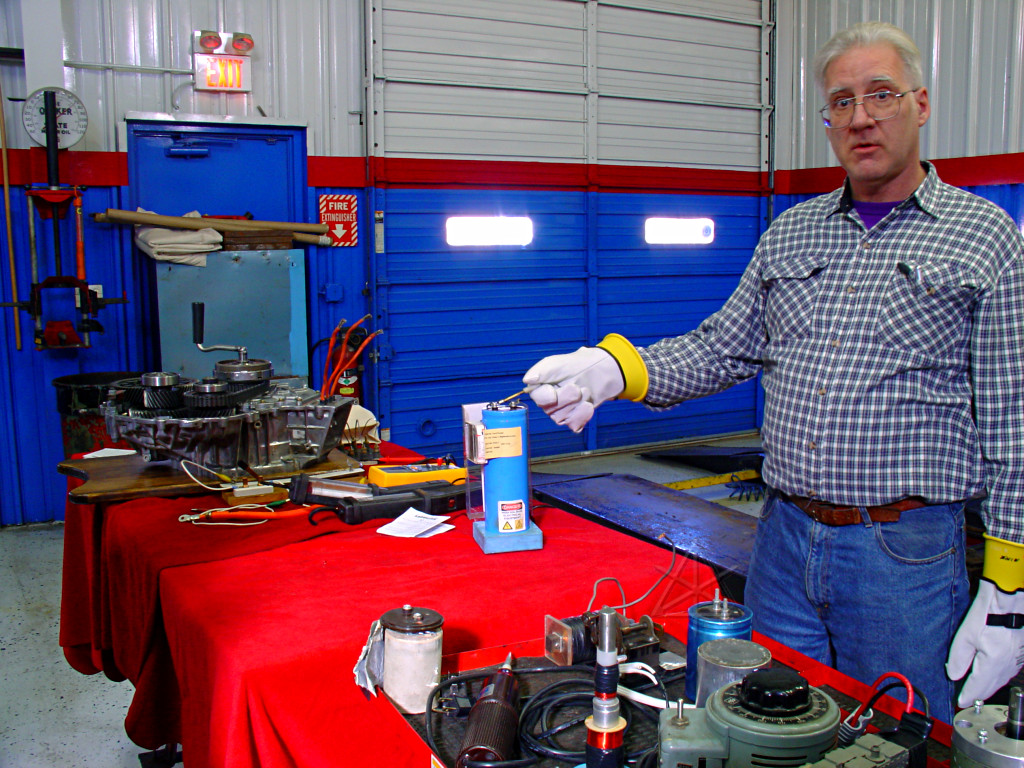
Mike and the Big Capacitor. Ready? ...
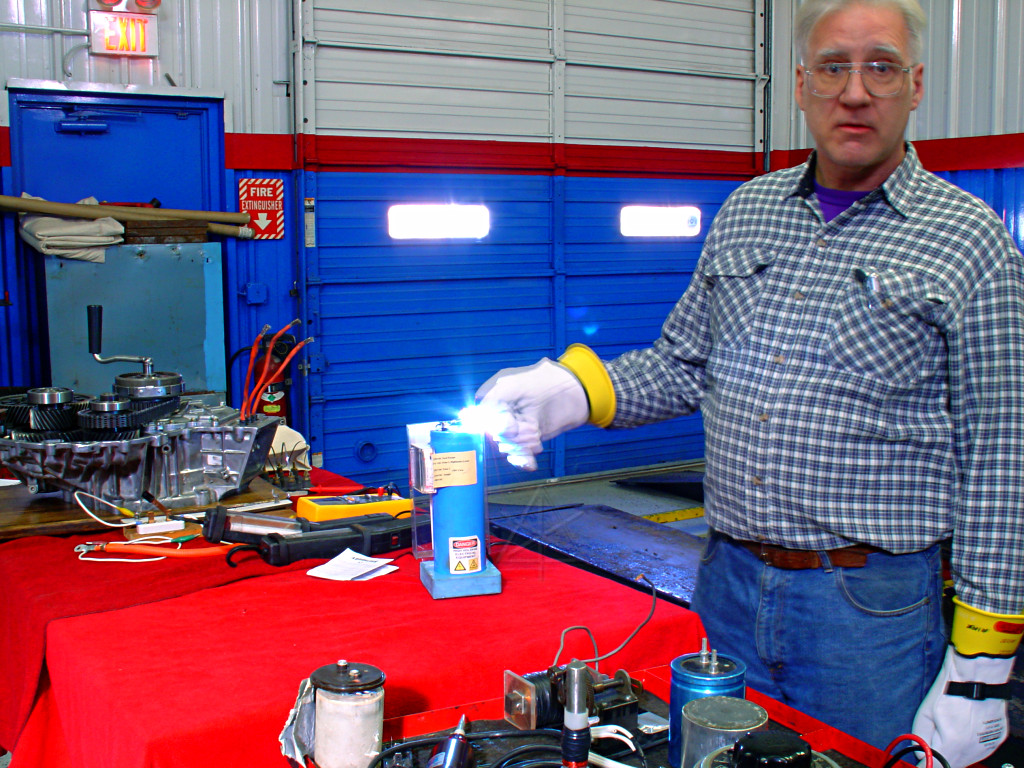
POW !!
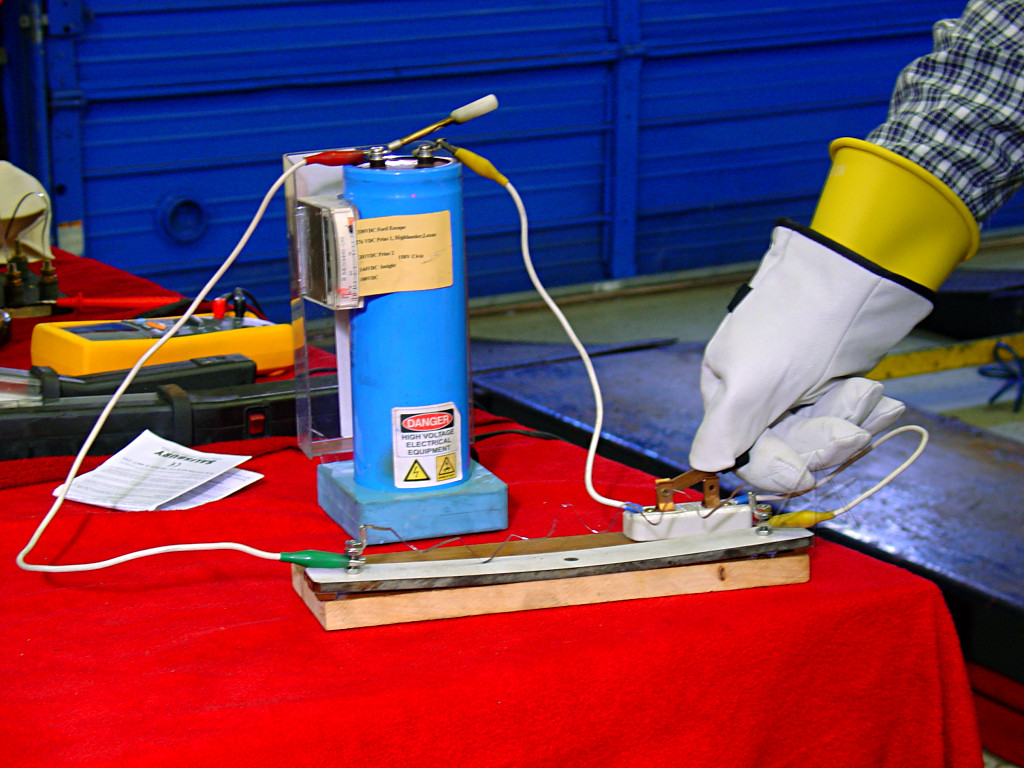
But with a little resistance, the big capacitor's energy barely glows the
piece of nichrome for an instant...
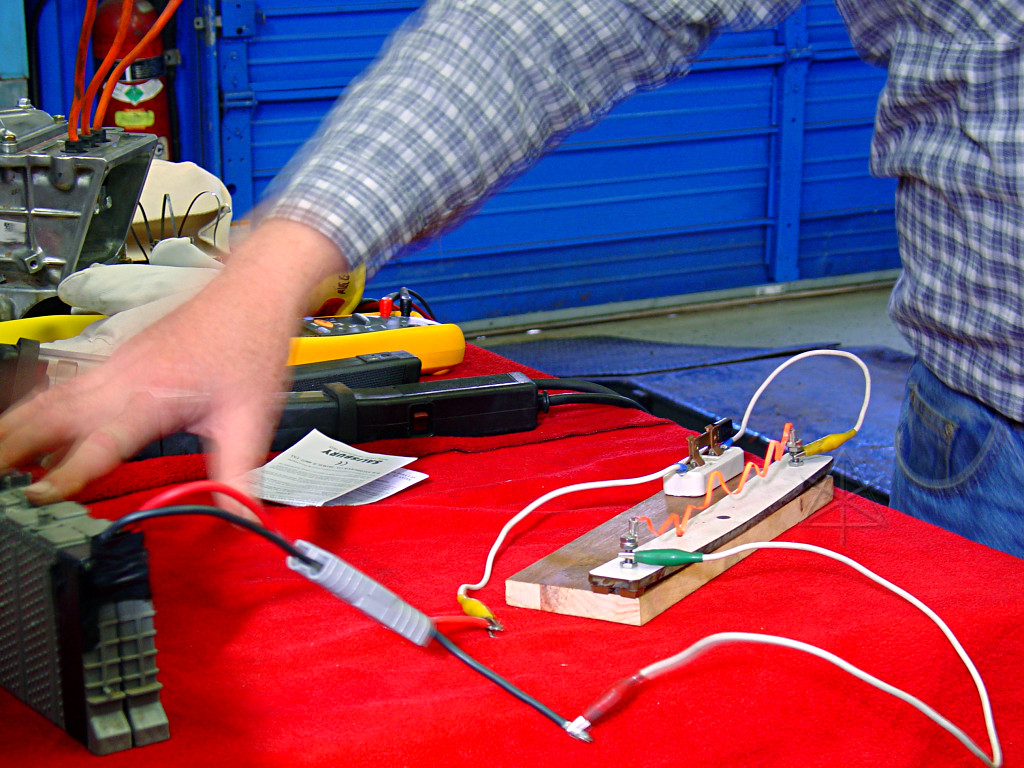
... whereas a couple of Prius battery sub-packs can light it up solid.
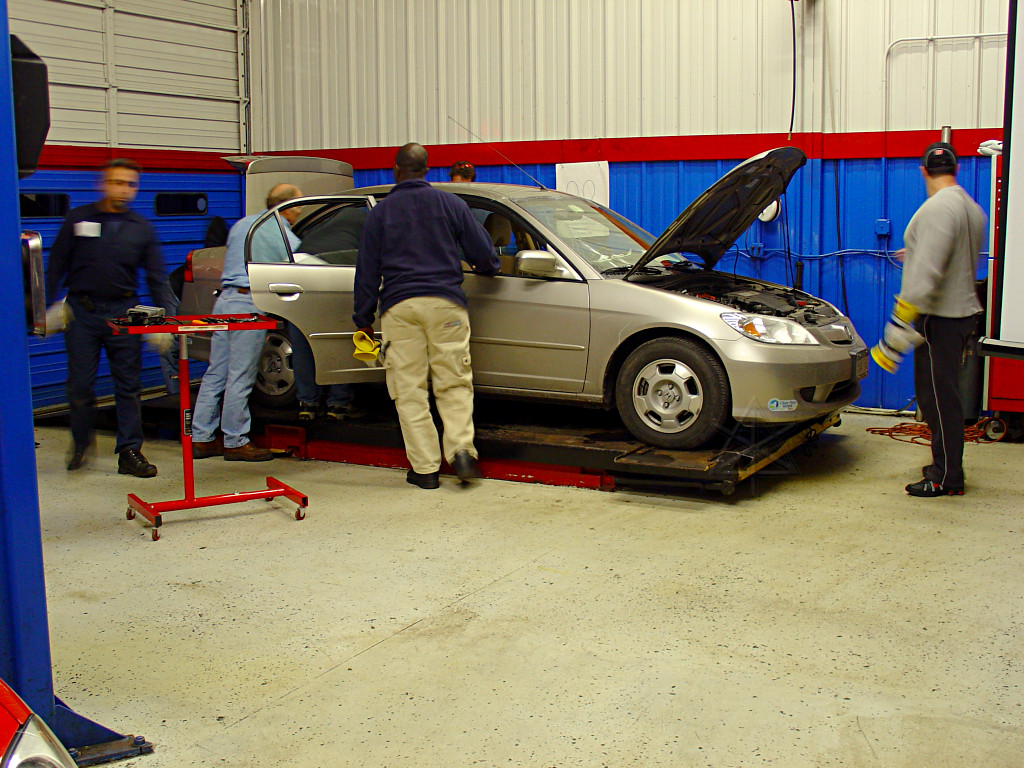
The guys prepare to attack the Civic hybrid...
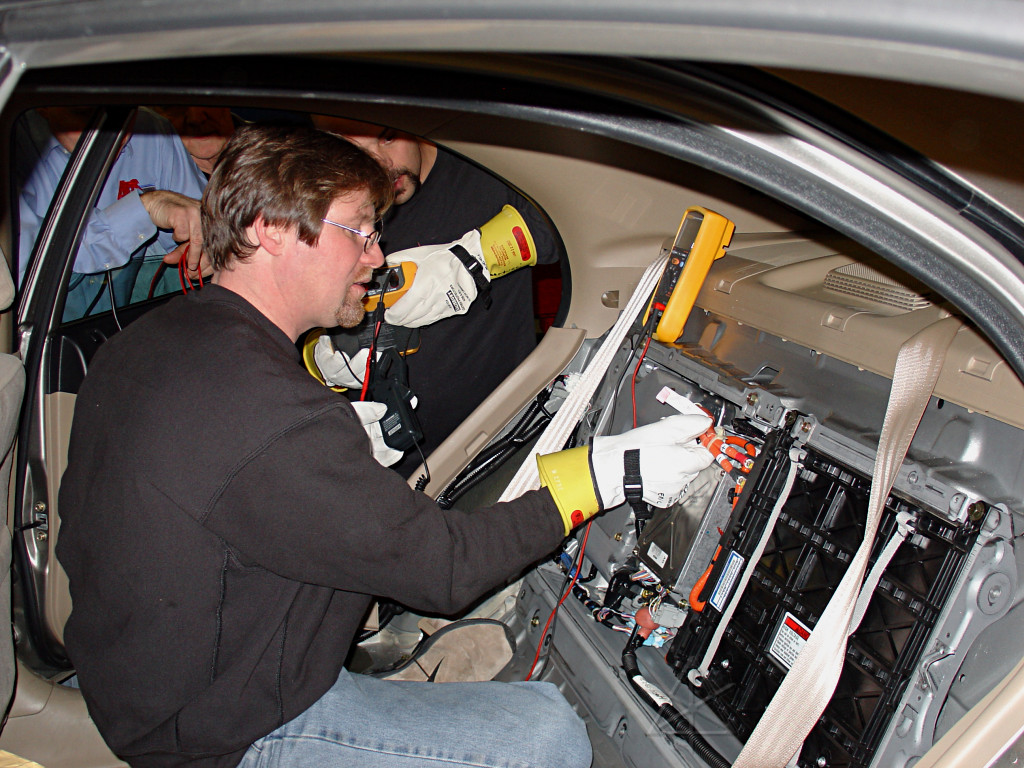
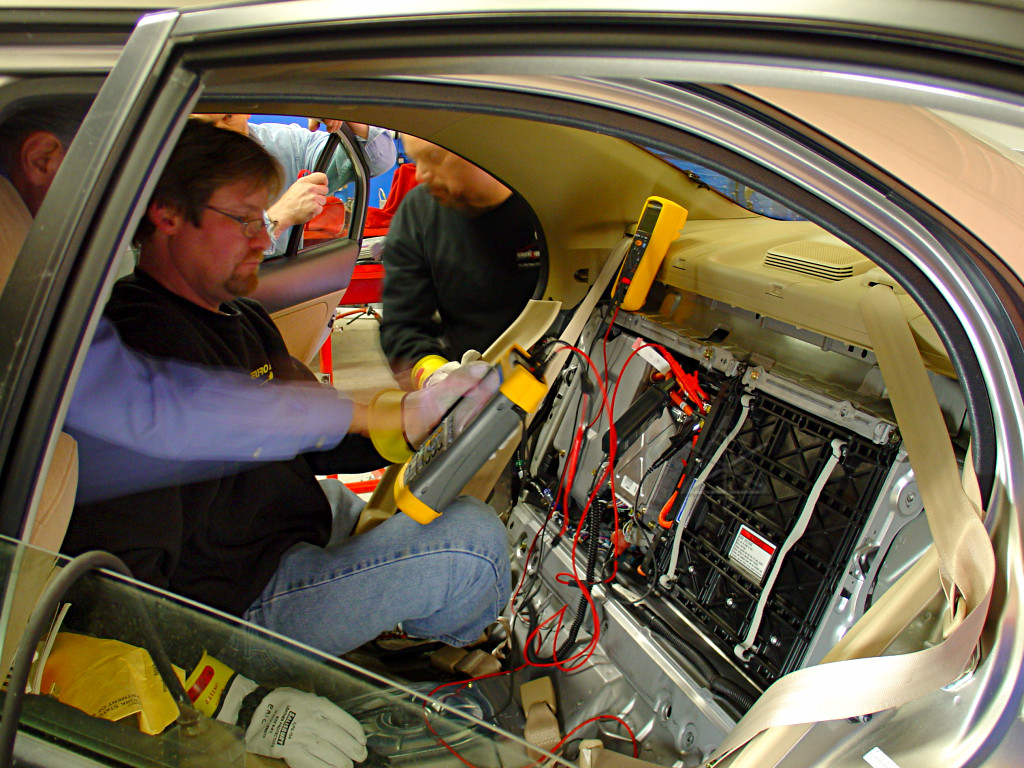
Once the battery area is exposed, we make SURE that the pack is disabled
and that no high voltage is present by testing it several ways...
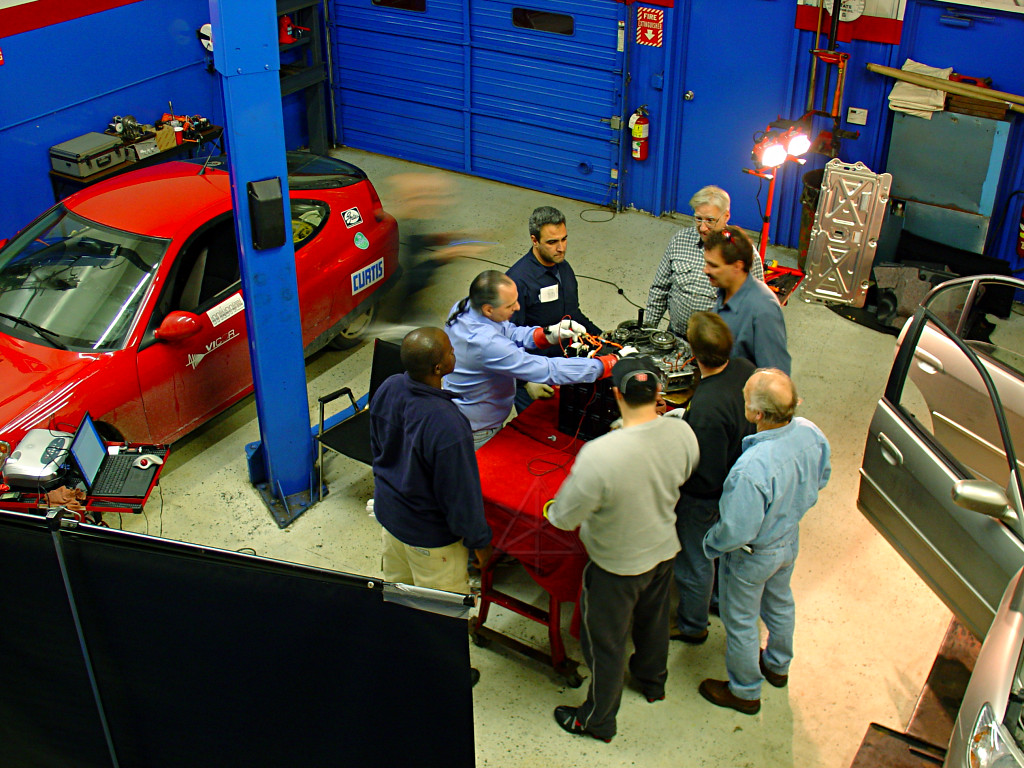
And once again when it's on the bench.  Careful probing around can reveal
some spots where voltage may still be present, so we don't want to
consider this sucker entirely safe.  And Honda just provides a switch,
not a removable service plug, meaning that it could get turned on again
by mistake while out of the car.
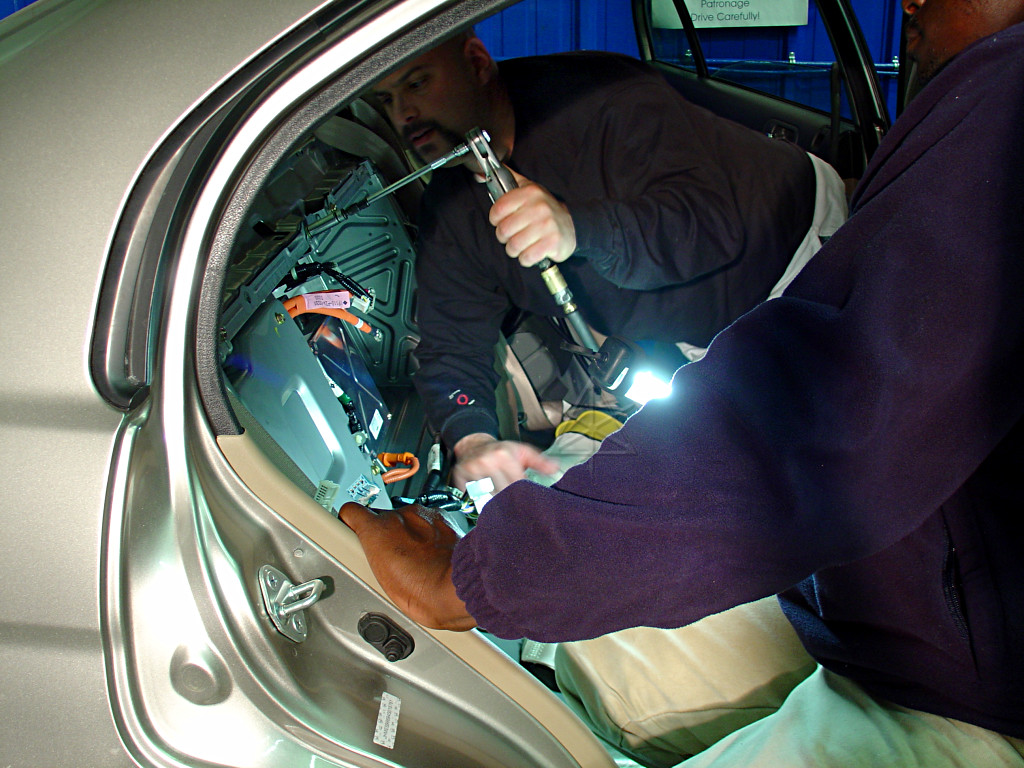
A little more rip-n-tear frees up the rest of the Civic hybrid modules from
the back-of-seat box.
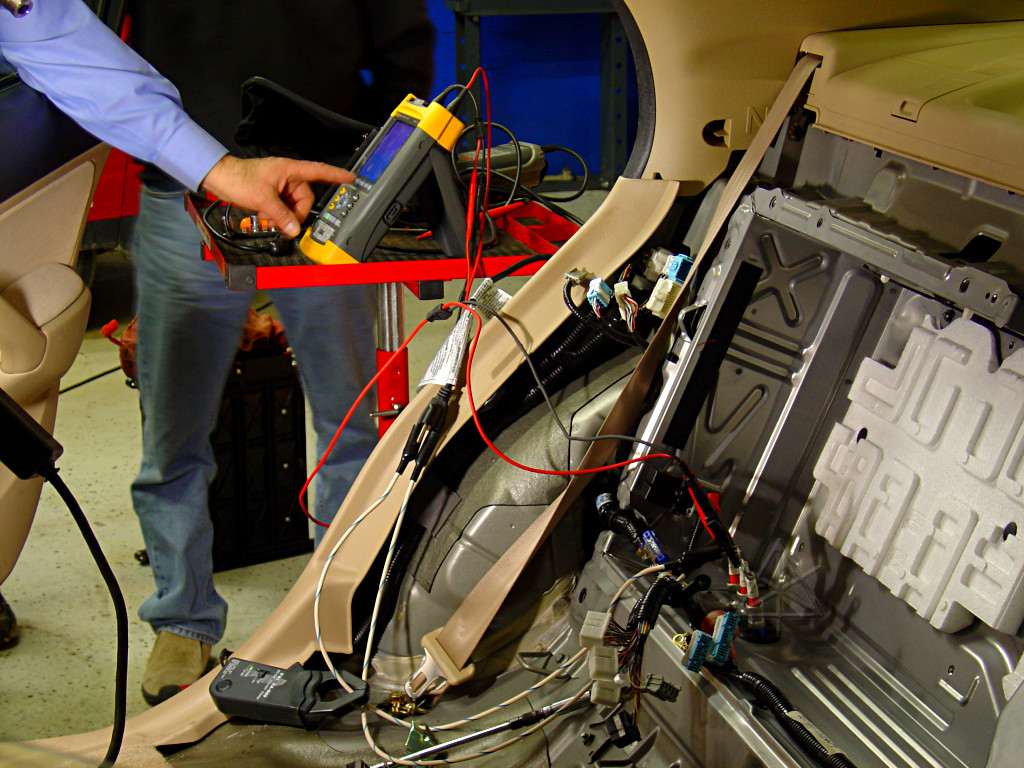
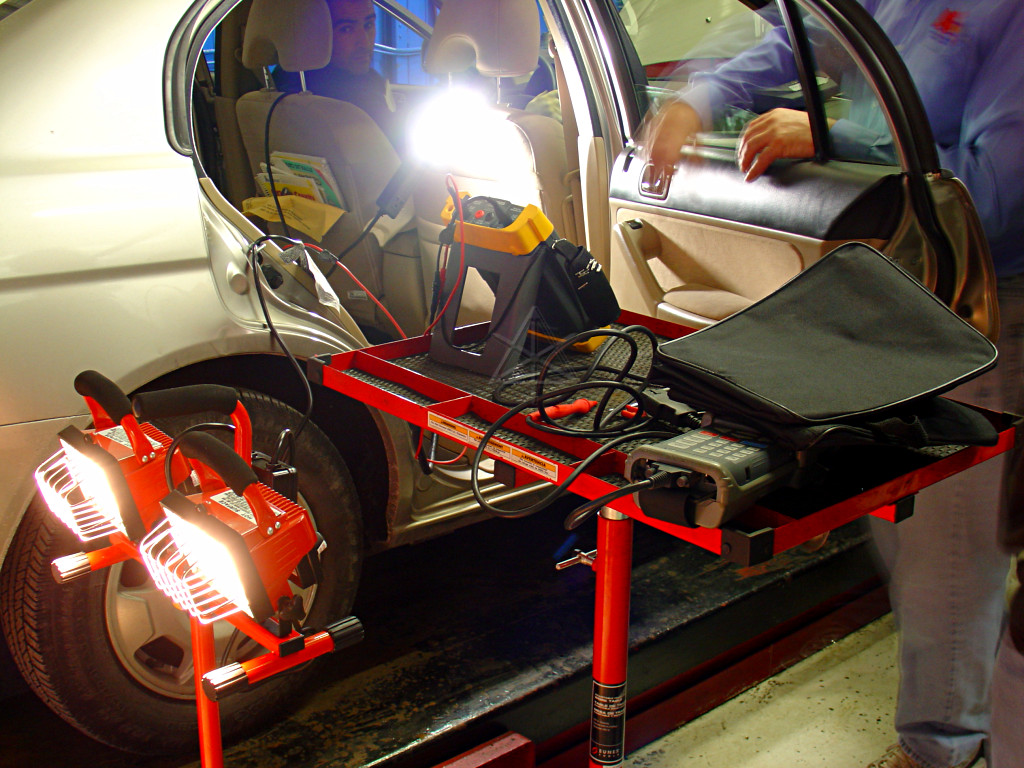
Now we're down to the IMA motor leads, which then get hooked up to a set
of shop worklights.  Revving the engine easily produces enough power to
light 'em up!  This is a fun demo of why it's good to tape up those leads
if there's any possibility of running the car in the meantime.  And yes,
Honda hybrids will run without the IMA -- just with less power, no assist
or regen, and no 12V charging system.

We also tore apart the valvetrain in this car, showing the "valve pause"
system that's a nifty modification of the VTEC layout, but I didn't get
any pix of that.  The IMA *still* has to spin the engine all the time, so
Honda is doing what it can to reduce the energy impact of that short of
paying Toyota a lot of money.  Turning the pistons into little air-springs
apparently helps quite a bit.
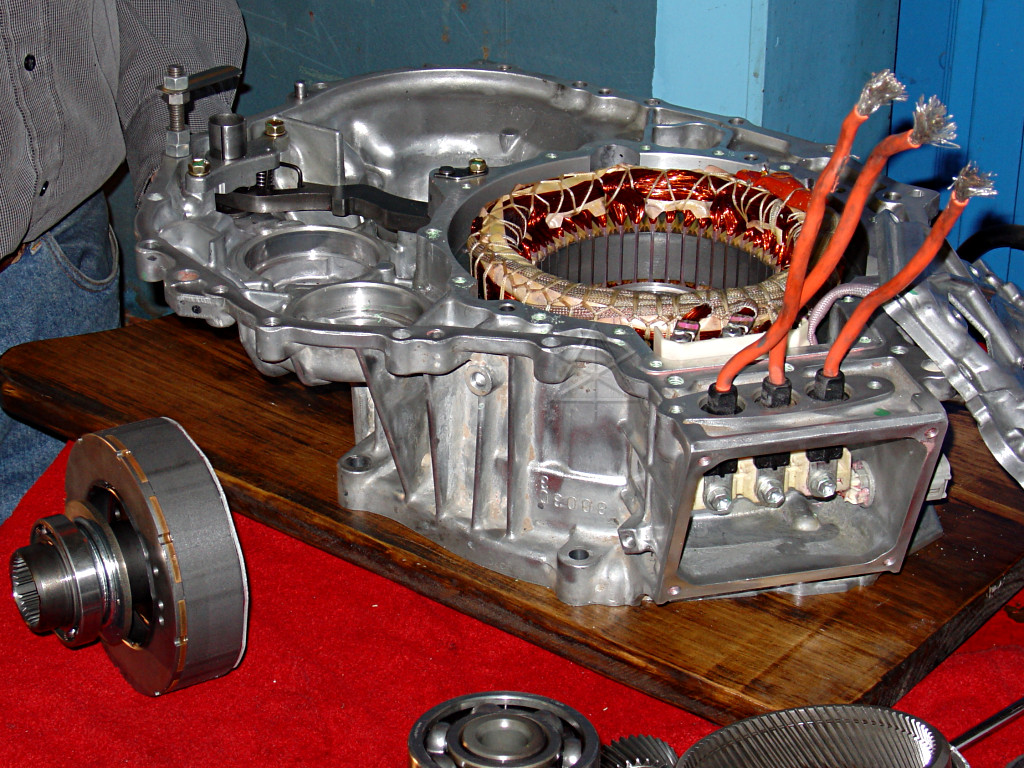
Prius MG1 rotor removed from the cranker. Mucho magnetism.
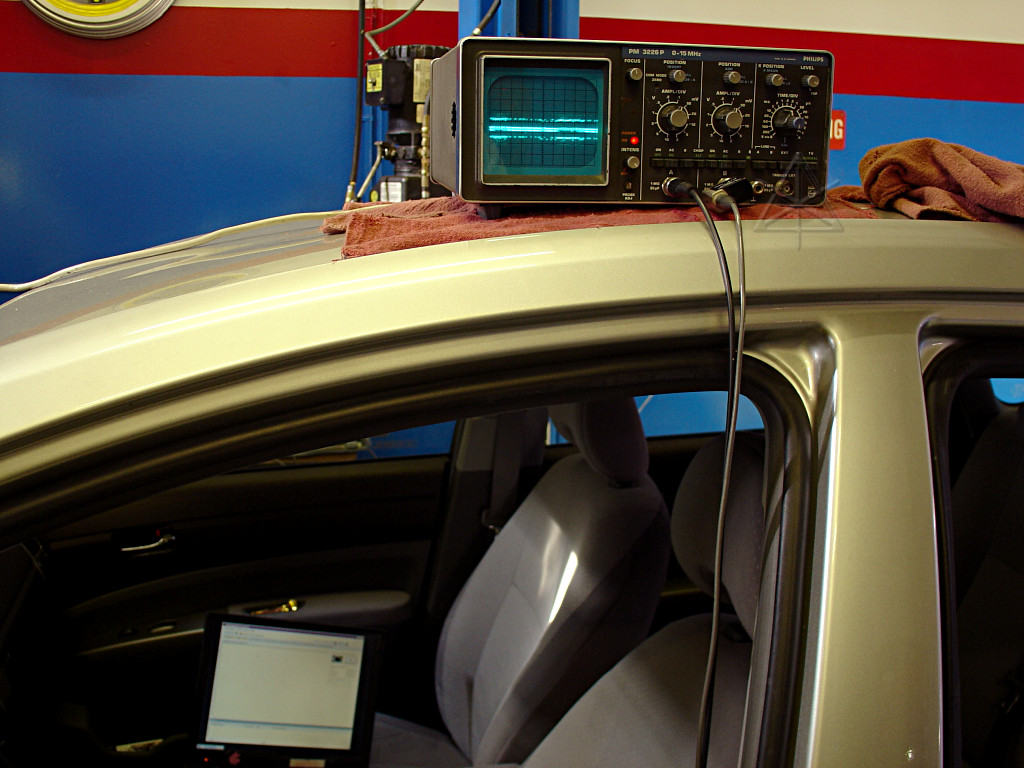
Watching the Prius CAN bus on my ol' analog scope, with CANH and CANL in
dual-trace mode.  We can't tell what it's saying, but we can tell that the
signal levels are good -- swinging up or down from 2.5 volts.  Without
functional CAN communication, the car goes nowhere!
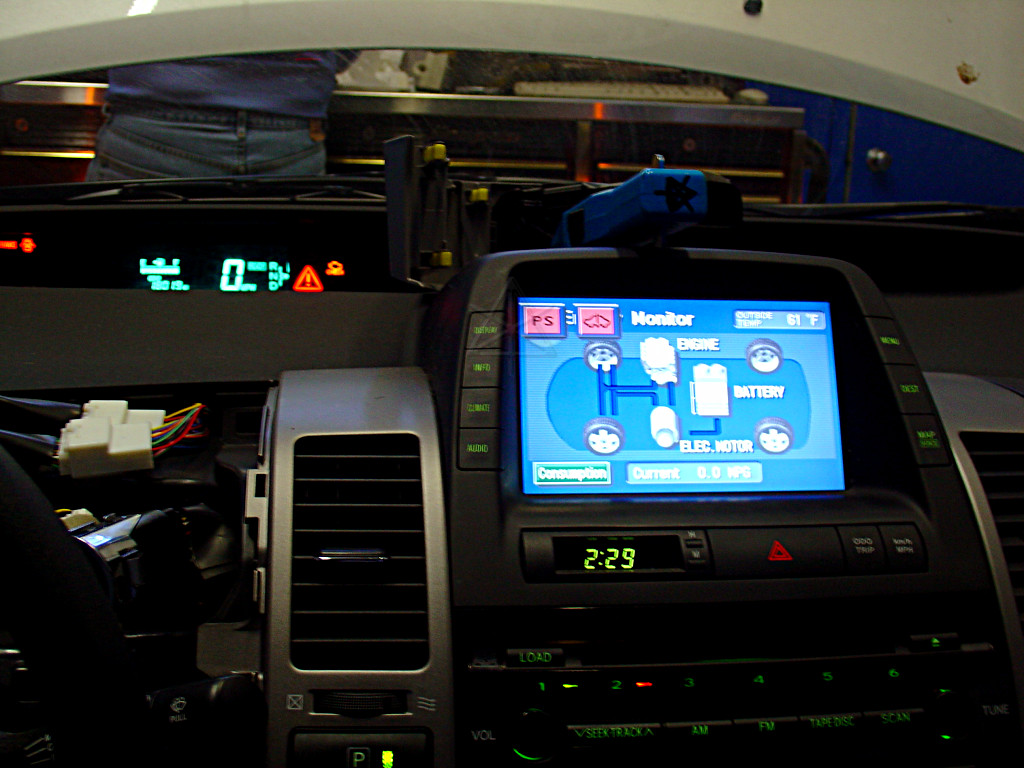
While current-ramping the Prius power steering, I unplugged the assist motor
output and then tried to crank the wheel.  Above a certain effort, the thing
immediately threw a code and lit the "PS" warning icon -- the EPS ECU
actually measures requested vs. actual motor current, and complains if
they differ significantly.

The hybrid warning is there [as usual] because we fired up the car without
the HV battery installed, to get it into neutral to push it slightly out
of the way.  Both these warnings and the triangle-of-doom and check-engine
light self-cleared after four reboots once everything was back together.